
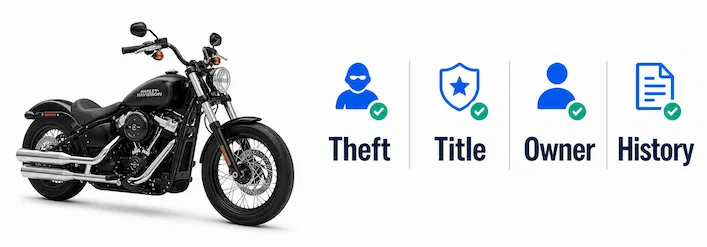


Buying a used motorcycle is easier when the listing, the seller, and the paperwork all tell the same story. The problem is that a clean photo can hide a branded title, accident history, mileage gaps, auction records, or theft records that change what the bike is really worth.
The VIN is the best place to start. It gives you a fixed 17-character number tied to the motorcycle's title, model details, and available history records. A quick VIN check can help you decide whether the bike is worth seeing in person.
What information can you find with a motorcycle VIN check?
A VIN Lookup can reveal valuable data that help you quickly verify the motorcycle and check its history before buying.
Motorcycle Specs
The report may show model, trim, engine, color, and equipment to confirm the bike matches the listing.
Title Status
Title status and title brands may help uncover paperwork issues before you negotiate with the seller.
Salvage Records
Reported salvage status and damage details may reveal problems that could affect safety and resale value.
Theft Records
Theft and recovery records may help you spot risk before arranging payment or meeting the seller.
Liens & Impounds
Reported lien and impound records may help identify legal or title issues that need clarification.
Accidents & Mileage
Accident, damage, and mileage records may help you compare the report with the bike's condition and odometer.
Market Value
Retail and trade-in estimates may give you a useful pricing reference before making an offer.
Sales Listings
Past asking prices and listed mileage may show how the motorcycle was previously marketed.
Motorcycle VIN Check
Enter a motorcycle VIN to check specs, title records, theft records, market value, sale listings & more.
Where to find the VIN on a motorcycle
Most motorcycles have the VIN near the steering neck, stamped on the frame or shown on a small plate. You may also see it on the title, registration, insurance paperwork, or seller documents.
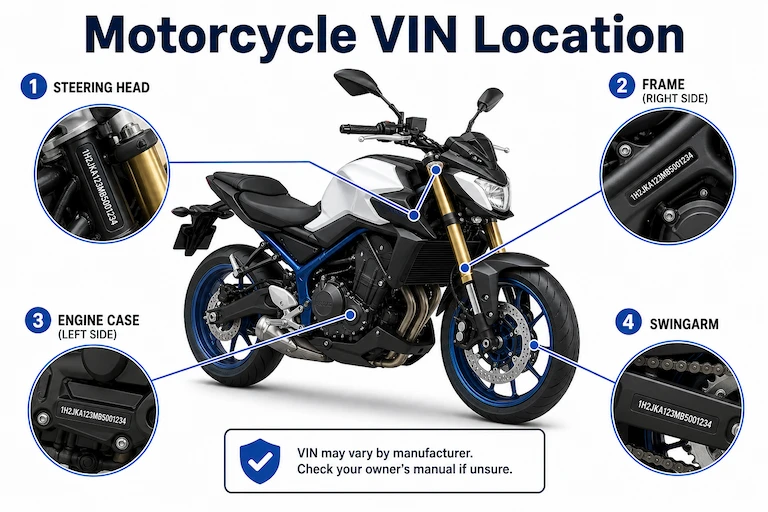
It is worth checking the number on the bike itself before relying on a report. The VIN on the frame should be readable and should match the paperwork. If the number looks altered, scratched, covered, or different from the title, that is a good reason to pause before sending money.
- The steering head or frame neck is usually the first place to check.
- The frame VIN should match the title and registration.
- Scratched plates, altered characters, or mismatched paperwork deserve a closer look.
- Official documents are worth reviewing before any deposit.
Why should you run a motorcycle VIN check?
A motorcycle VIN check helps you look past the listing photos and seller description. A bike can look clean online but still have title problems, theft records, mileage issues, auction history, or past damage that affects its real value.
Checking the VIN early gives you a better starting point before you meet the seller. If the records look clean, the bike may be worth a closer look. If something looks off, you have a clearer reason to ask questions, negotiate carefully, or move on.
How to run a motorcycle VIN check
The search starts with the 17-character VIN. Once you enter it into the search box, you can review available title, theft, mileage, accident, damage, and sale-history records tied to that motorcycle.
Search the VIN Number with BeenVerified
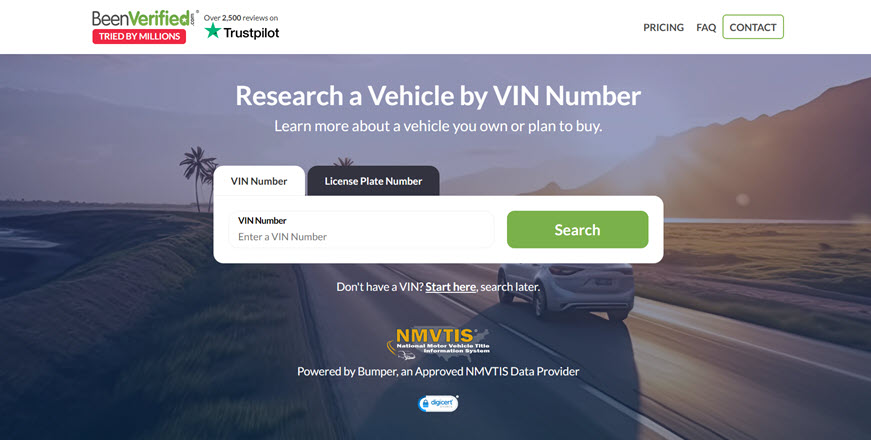
BeenVerified is an NMVTIS data provider that offers instant and affordable access to billions of vehicle records, making it easier to research before you buy or sell. If you're checking a used motorcycle, it helps you scan reliable vehicle-history data without piecing records together by hand.
A BeenVerified VIN report may show motorcycle specs, title brands, theft records, accident or damage history, mileage details, sale listings, and market value. Use those records to compare the seller's story with the paperwork, spot price issues, and decide whether the bike deserves a closer inspection.
Search the Motorcycle VIN with BeenVerified
Enter a motorcycle VIN to check specs, title records, theft records, market value, sale listings & more.
The goal is not to collect trivia about the bike. It is to avoid paying clean-title money for a motorcycle with messy history. If the seller says the bike has never been damaged, but the report suggests a salvage or auction event, the next step is usually to ask for paperwork and inspect the motorcycle more carefully.
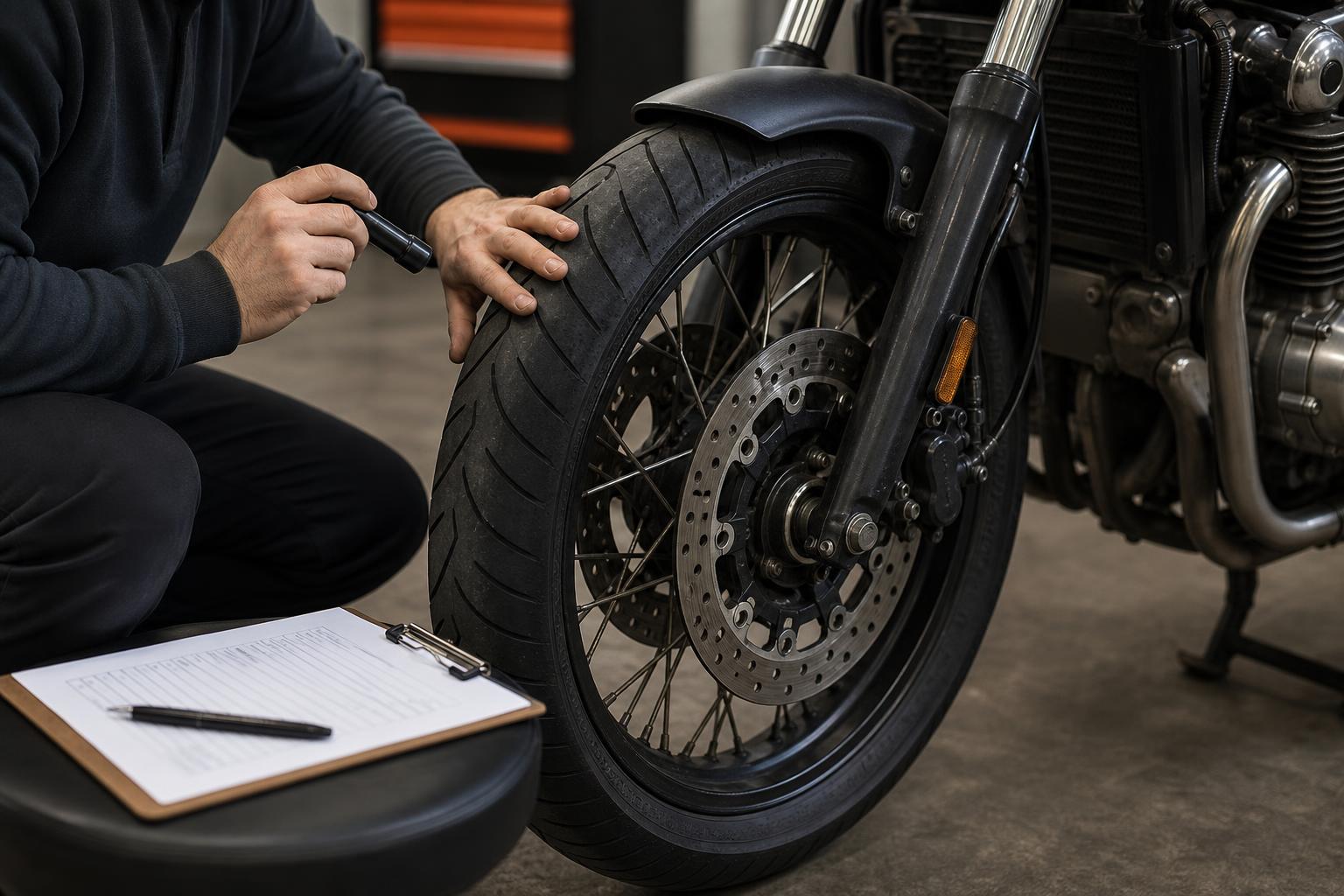
How to check a motorcycle before you buy
A good first move is to use the VIN before scheduling a serious meeting. The report can help you check whether title, mileage, theft, accident, or sale-history records raise questions worth asking before you spend time on the bike.
From there, the report is most useful when it lines up with the paperwork and the physical motorcycle. The title, registration, seller name, odometer, and frame VIN should tell the same basic story. If they do not, it is reasonable to ask for documents before negotiating.
The final step is still the in-person inspection. A VIN report can help screen the history, but the current condition matters too: frame, fork alignment, engine case, chain, tires, brakes, lights, controls, cold start, and service records.